




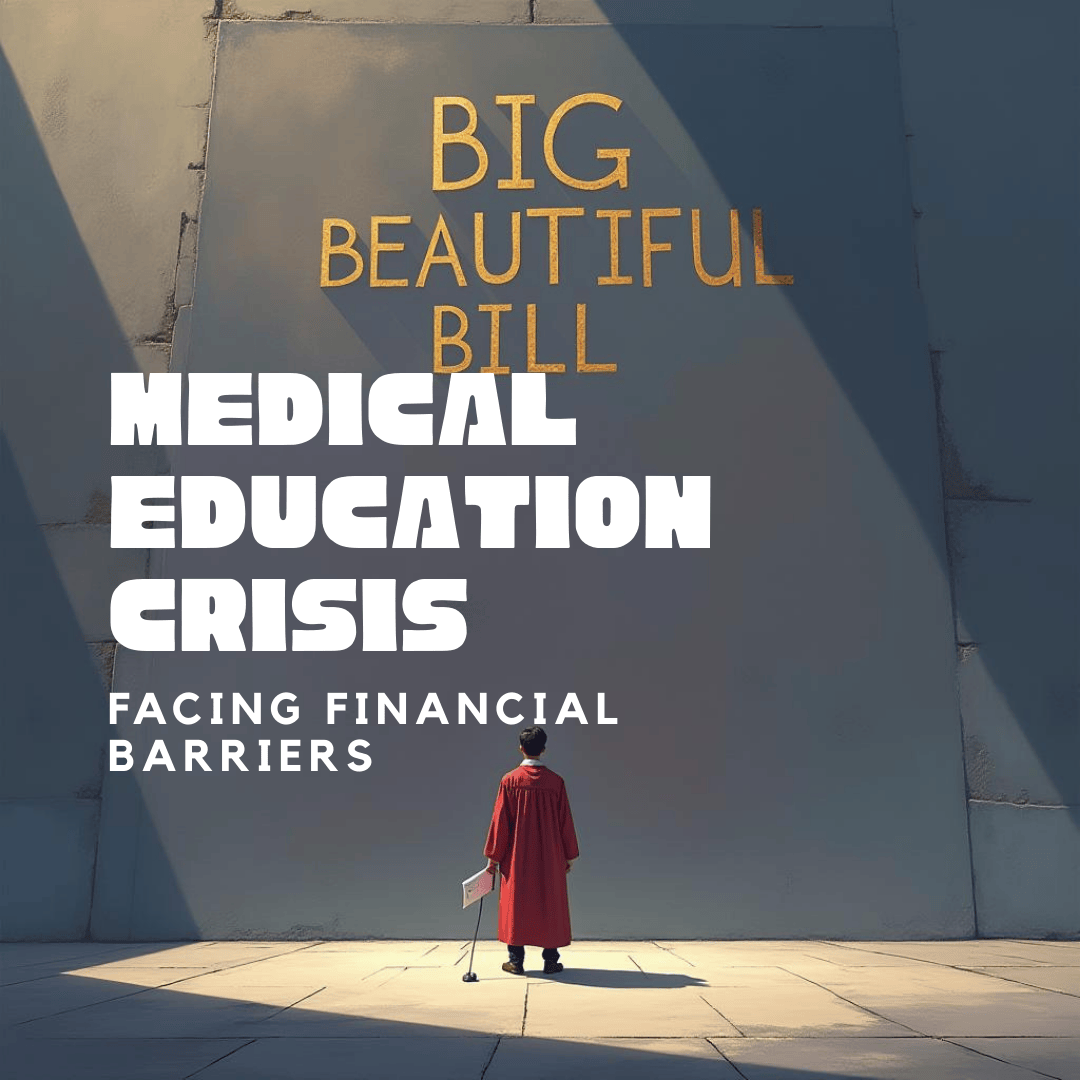
On July 4, 2025, Congress passed the One Big Beautiful Bill, a sweeping piece of legislation that changes how education and healthcare are funded in America.
Supporters claim it reduces government spending and simplifies the tax code. But for future doctors, lawyers, dentists, and even engineers, the bill could be a serious roadblock, limiting how much they can borrow and threatening the hospitals and clinics where they train.
Let’s break it all down.
📅 When Does the Law Take Effect?
Professional School Is Expensive, Really Expensive
Program | Average Cost of Attendance | Max Debt Allowed Under the Bill |
Medical School | $300,000–$400,000+ | $200,000 lifetime cap |
Dental School | $300,000–$450,000+ | $200,000 lifetime cap |
Law School | $200,000–$300,000 | $200,000 lifetime cap |
Engineering Grad | $90,000–$150,000 | $100,000 lifetime cap |

How This Impacts Future Doctors
Under the bill:
🧪 It’s Not Just About Loans, Training Sites Could Disappear
The Big Beautiful Bill doesn’t just limit how much students can borrow it also slashes over $1 trillion from Medicaid, which plays a critical role in medical education.
Medicaid currently:
With deep Medicaid cuts:
❌ No hospitals = no hands-on training = fewer prepared doctors.
This means medical students, not just patients, are on the front lines of this funding crisis.
This isn’t just a funding issue; it’s a threat to the pipeline of future physicians.
Who’s Hit the Hardest?
Group | Impact |
Medical students | May not borrow enough to finish school |
First-gen & underserved students | Lose safety nets like Grad PLUS loans |
Rural training hospitals | May close or cut back on preceptorships |
🔁 Can It Be Repealed?
There’s growing pushback:
If repealed:

Final Word: A Law That Could Shrink the Next Generation of Doctors
Medical students already face rigorous coursework, long hours, and immense pressure. Now, they face a new threat: the inability to fund their education or complete their training.
The Big Beautiful Bill may reduce government debt, but it does so at the cost of our future physician workforce.
If the U.S. wants more doctors, especially those willing to serve in underserved, rural, or primary care settings, it must invest in the path that gets them there. That means restoring financial access, protecting Medicaid, and ensuring that education is a bridge, not a barrier to becoming a doctor.